
Lead Generation Automation: Systems That Work for Australian SMBs
Learn how lead generation automation works, which tools suit Australian SMBs, and how to build a system that fills your pipeline without manual work.
Quick summary
Lead generation automation uses software to find, capture, and qualify potential customers without requiring someone to manually chase every enquiry. For Australian small and medium businesses, a well-built automated lead generation system means fewer leads falling through the cracks, faster follow-up, and a sales pipeline that keeps moving even outside business hours.
Key takeaways:
- Lead generation automation covers four stages: capture, enrichment, scoring, and CRM storage.
- LinkedIn automation tools serve B2B businesses; website and chatbot automation suits most others.
- The biggest gap in most SMB pipelines is not capture but the 30-to-60-minute follow-up window after a lead arrives.
- n8n and similar workflow tools have made custom automation accessible without enterprise budgets.
- Choosing the wrong layer to automate first wastes time; start with whichever stage loses the most leads today.
What is lead generation automation?
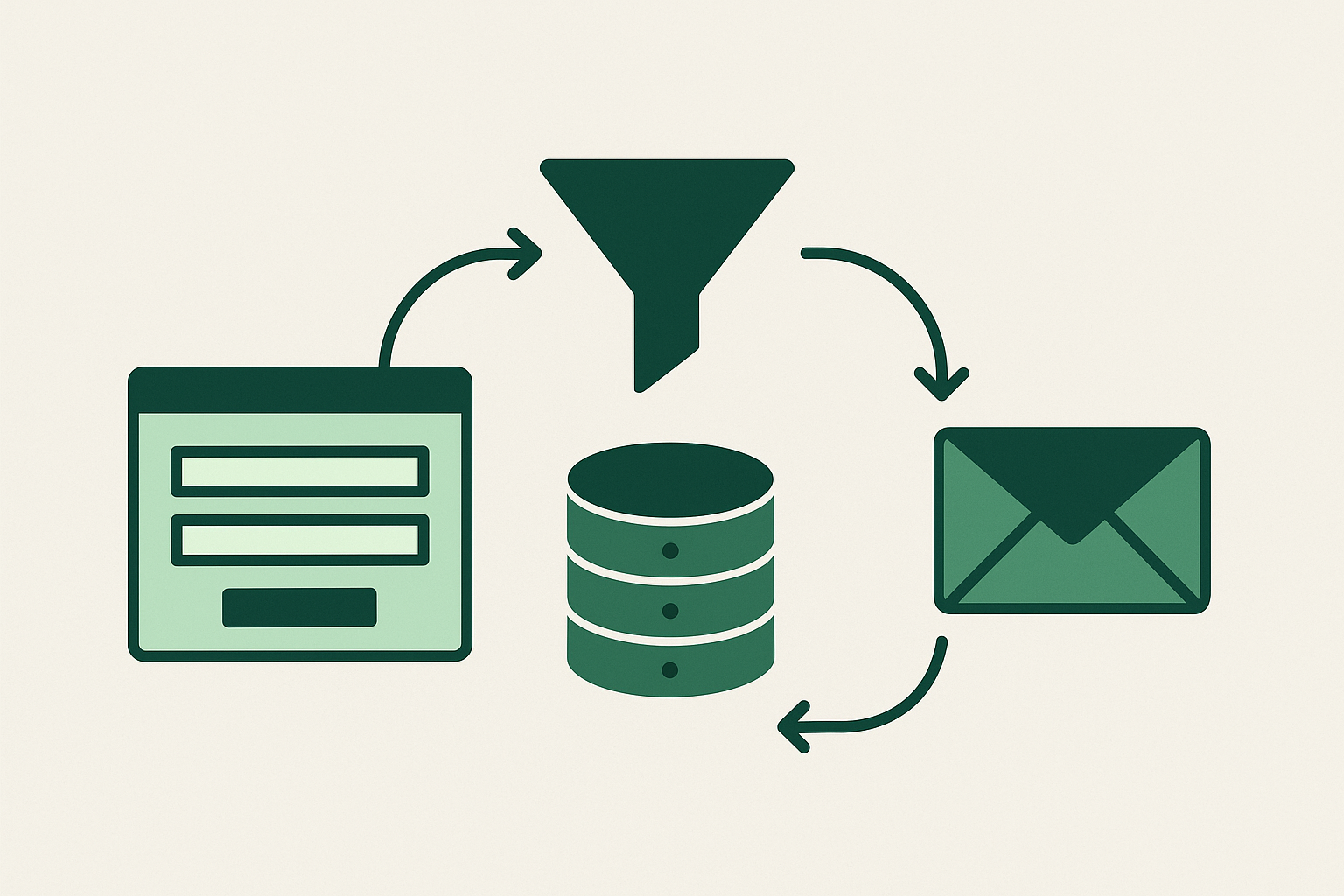
Lead generation automation is the use of software and, increasingly, AI to move a prospect from first contact to your sales pipeline without a human touching every step. Think of it as a digital assembly line: a visitor fills out a form, a chatbot qualifies their needs, their data is enriched with company details, they are scored on fit and intent, and the result lands in your CRM ready for a follow-up call.
The four stages are consistent across nearly every system:
- Capture: Forms, landing pages, chatbots, or LinkedIn outreach collect prospect details.
- Enrichment: Tools clean the contact data and layer on company or industry context.
- Scoring: The system ranks prospects by behaviour and fit so your team prioritises the right ones.
- CRM storage: A central platform tracks every interaction and updates lead status automatically.
What distinguishes an automated lead generation system from a basic CRM is that the hand-offs between these stages happen without manual intervention.
What is a lead automation system, in practice?
A lead automation system is the connected stack that runs those four stages end-to-end. In practice, it usually looks like two or three tools talking to each other through a workflow platform.
A common Australian SMB setup: a website chatbot captures an enquiry and asks two or three qualifying questions, a workflow tool (n8n is increasingly popular for this, as reflected in the volume of public templates on GitHub) passes the answers to a CRM, and an automated SMS or email goes to the prospect within minutes. The team sees a scored, context-rich lead record, not a raw email notification.
The “automatic” part is the workflow platform in the middle. Without it, every tool is an island. HubSpot, Mailchimp, and Marketo each offer built-in automation at the higher end of the market; n8n and Make suit businesses that need custom logic at a lower cost.
If you are still manually copying enquiry form submissions into a spreadsheet, that is the first stage to automate, and it will deliver more immediate value than any outreach tool.
How to use AI to automate lead generation
AI enters the lead generation automation workflow at two high-value points: qualification and personalised outreach.
Qualification: An AI layer reads a prospect’s answers, website behaviour, or company profile and assigns a score or category. This replaces the human step of reading every enquiry and deciding whether it is worth a call. In the deployments we run for Australian service businesses, the qualification step alone cuts the volume of time-wasted calls by surfacing only the leads that match the client’s customer profile.
Outreach personalisation: Workflow tools like n8n can connect a web scraper or LinkedIn data source to an AI model, which then drafts a personalised first message for each prospect. The Google AI Overview for this topic describes exactly this pattern: scraping tools (such as Apify) combined with models like ChatGPT or Gemini to draft cold emails, with results logged automatically. This is not theoretical; it is the architecture behind most modern B2B outreach sequences.
The practical limit for Australian SMBs is data quality. AI personalisation is only as good as the contact data it receives. Enrichment before the AI step is not optional.
If you want to see how this fits alongside a broader automation strategy, our post on AI automation agencies and how to choose one covers the build-versus-buy question in detail.
LinkedIn automation tools for lead generation
LinkedIn automation for lead generation refers to software that automates connection requests, follow-up messages, or profile scraping on the platform to build a B2B prospect list at scale.
For Australian B2B service businesses, automated LinkedIn lead generation is a legitimate top-of-funnel channel when used within LinkedIn’s terms of service. The distinction matters: tools that operate through the official API or LinkedIn’s own advertising and lead gen forms carry no account risk; tools that simulate browser behaviour sit in a grey area.
LinkedIn’s own resources on lead automation emphasise using Lead Gen Forms connected to CRM platforms as the lowest-risk, highest-quality approach. The form pre-fills from a member’s profile, which dramatically improves data quality compared with a cold scrape.
Where LinkedIn automation tools for lead generation add value for SMBs:
- B2B professional services (accounting, legal, consulting, recruitment) where decision-makers are active on the platform.
- Trade and industry suppliers targeting procurement contacts in a specific sector.
- Event and workshop promoters running targeted connection campaigns ahead of a launch.
Where it adds less value: consumer-facing businesses, local service trades, and any business where the buyer is not a LinkedIn user. For those, website chatbot and Google Ads lead capture automation will outperform LinkedIn every time.
When evaluating LinkedIn automation tools, the decision criteria that matter for an Australian SMB are different from what most comparison articles cover. See the table in the next section.
Lead generation automation tools compared
The commercial intent of this cluster means you need a decision framework, not another list of logos. Here is how the major approaches compare on criteria that matter at the SMB level.
| Approach | Best fit | Setup complexity | Ongoing cost range | Key risk |
|---|---|---|---|---|
| Website chatbot + CRM | B2C and B2B, most industries | Low to medium | Low | Chatbot needs regular prompt tuning |
| LinkedIn Lead Gen Forms + CRM | B2B, professional services | Low | Medium (ad spend required) | Audience size limits in niche markets |
| LinkedIn outreach automation (API-compliant tools) | B2B, defined ICP | Medium | Medium | Requires strong copywriting to convert |
| Workflow automation (n8n, Make) + AI enrichment | B2B with custom data needs | High | Low to medium | Requires technical setup or agency support |
| All-in-one platforms (HubSpot, Marketo) | Businesses with 10+ person sales teams | Medium | High | Overbuilt for most Australian SMBs under 20 staff |
The observation we make consistently across the deployments we run for Australian businesses: SMBs tend to over-invest in the capture tool and under-invest in the follow-up automation. Capturing a lead in under a minute is worthless if the first human response arrives four hours later. Automating the first response, the qualification question, and the booking prompt is where the pipeline actually moves.
Ready to map out which layer to automate first? Book a short consultation and we will walk through your current pipeline in plain terms.
How to build an automated lead generation system for your business
Building an automated lead generation system is a sequencing problem more than a technology problem. Here is the order that produces results fastest for Australian SMBs.
- Identify the leakiest stage first. Audit where leads drop out today. Most businesses lose them between capture and first contact, not at the top of the funnel.
- Automate capture before outreach. If your website form still sends an email to a shared inbox, fix that before you build any outreach sequence.
- Connect capture to your CRM immediately. Every lead should create a CRM record automatically, with source and answers attached, at the moment it arrives.
- Add automated first response. An SMS or email that arrives within five minutes of a form submission sets the tone and keeps the prospect warm. This single step has a measurable impact on conversion rates across service businesses.
- Build scoring only when you have volume. Lead scoring is a refinement for businesses receiving more leads than the team can handle. If you receive under 50 leads per month, a simple qualification question inside the chatbot achieves the same result.
- Add outreach automation last. Outbound LinkedIn or email sequences amplify a working inbound system. They do not replace one.
Our post on automated booking systems for Australian small businesses covers the final conversion step once a lead is in the pipeline.
What the current Australian market looks like
The Australian SMB market is at an interesting inflection point for lead generation automation. The infrastructure (affordable workflow tools, accessible AI APIs, local LinkedIn audiences) is mature. The adoption gap is still wide, which means businesses that build a working automated lead generation system now hold a real operational advantage over competitors who are still on manual follow-up.
A pattern we see in the deployments we run for Australian trades, professional services, and health businesses: the biggest unlock is not a new tool. It is connecting the tools already in place. Most small businesses have a website, a CRM (even if it is just a spreadsheet), and some form of email. An automated lead generation system built on those three elements, with a chatbot as the capture layer and a workflow tool handling the hand-offs, outperforms expensive all-in-one platforms for businesses with lean teams.
The n8n ecosystem reflects this. The volume of community-built lead generation workflow templates (covering everything from LinkedIn scraping to form-to-CRM pipelines) shows where the practitioner market is heading: composable, low-cost, customisable automation rather than monolithic SaaS subscriptions.
For businesses curious about how a chatbot fits into this stack, our post on website chatbot options compared for Australian SMBs breaks down every format in detail.